Finding Meaning in Words
When I first encountered a patient struggling to express their thoughts during my undergraduate studies, I witnessed something profound: the disconnect between what the mind wants to say and what words actually emerge. That moment changed everything for me. It wasn’t just about understanding schizophrenia as a mental illness; it was about recognizing that language itself could be a window into the human brain and its struggles.
As someone trained in both linguistics and neuroscience, I’ve always been fascinated by how we communicate. But schizophrenia presented a unique puzzle: people with this condition often face challenges not because they lack things to say, but because the bridge between thought and speech becomes unstable. This realization led me to ask: What if we could better understand schizophrenia by studying how people use language? One of the most important questions in this field is: How can we detect psychosis before it fully develops? Early intervention can dramatically improve outcomes, but we need reliable, accessible tools. Language analysis offers something unique; it’s non-invasive, can be captured through simple conversations, and reflects what’s happening in the brain in real-time. Imagine a future where a brief conversation could alert healthcare providers to early warning signs, allowing intervention before symptoms become severe.
Winning the 2024 SIRS Early Career Award and presenting at the Congress in Florence was a turning point in my career. SIRS isn’t just a research society; it’s a global family of scientists, clinicians, and advocates united by a common mission to improve lives. The connections I made, the feedback I received, and the exposure to cutting-edge research across disciplines reshaped how I think about my work. It validated that studying language in psychosis isn’t a niche pursuit; it’s central to understanding and treating the condition.
Looking ahead, I’m excited about integrating artificial intelligence into clinical settings. My current projects include developing AI-powered apps for diagnosing and supporting individuals with anxiety, depression, and aphasia. I’m also working on creating linguistic assessment tools specifically designed for English, French, and Arabic-speaking populations with aphasia and schizophrenia communities that have been underserved in research. Language barriers shouldn’t mean diagnostic barriers.
When I imagine a young person developing psychosis twenty years from now, I envision a world where they receive immediate, personalized support. Perhaps their smartphone detects subtle changes in their speech patterns and gently suggests they talk to a counselor. Perhaps their clinician uses an AI-assisted tool that analyzes their language to tailor treatment specifically to their needs. Most importantly, I hope they live in a world where mental illness carries no stigma, where seeking help is as normal as treating any other health condition. What excites me most about psychosis research today is the convergence of disciplines. Neuroscientists, linguists, computer scientists, and clinicians are working together in unprecedented ways. Organizations like SIRS make this collaboration possible by bringing diverse minds together, fostering innovation, and ensuring that research translates into real-world impact.
To families and individuals affected by schizophrenia: your experiences matter to researchers like me. Every conversation, every story shared, contributes to our understanding. The future of psychosis treatment is bright because we’re learning to listen not just to symptoms, but to the unique language of the human mind.
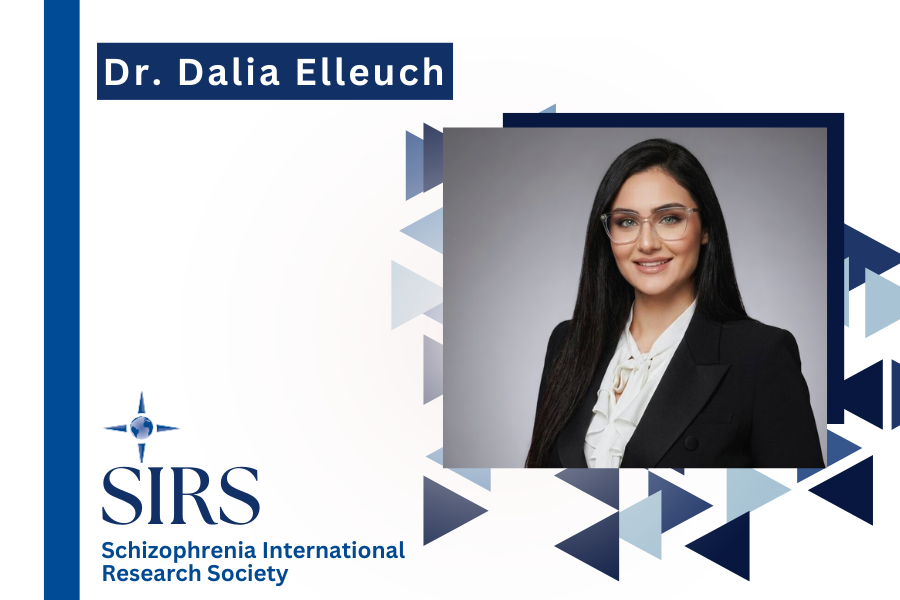
Dr. Dalia Elleuch is an Assistant Professor and Clinical Neurolinguist at the Higher School of Health Sciences and Techniques of Sfax, Tunisia, and the 2024 SIRS Early Career Award Winner. Her research focuses on the intersection of neuroscience, linguistics, and mental health.