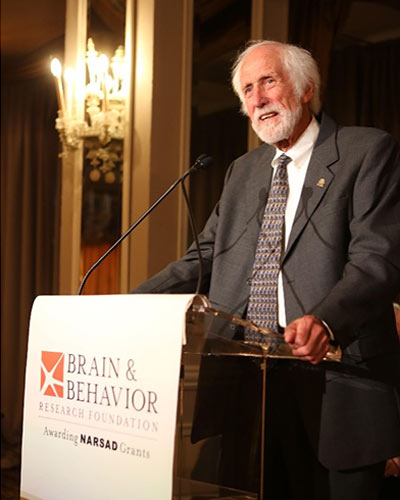
 This week we have lost a person who built much of the foundation of schizophrenia research. In his over 50-year career, Professor Will Carpenter strived for a better understanding, more effective treatment and higher quality of life for people with severe mental illness, in particular those with psychotic illness. In his long career, he laid the foundation for our current understanding of schizophrenia as a heterogeneous syndrome composed of positive, negative and cognitive symptoms, with the deficit syndrome contributing most to loss of functioning. His domain-specific approach was fundamental for later pharmacological innovations, for all three symptom clusters. He advanced translational science for psychiatry and improved research methodology and trial design. He was instrumental to the difficult birth of DSM 5 and promoted scientific contributions as editor of Schizophrenia Bulletin for over 18 years.
Many SIRS members have worked with him and consider him not only a supportive and original collaborator, but especially a kind and helpful mentor and dear friend. He saw people for what they said and did, not for their rank or function. Below you find the testimonies of some SIRS members who had the pleasure to work with him. If you wish to contribute your memories of Will, please send them to info@schizophreniaresearchsociety.org
As a PhD student, Dr. Carpenter was simply the editor in chief of Schizophrenia Bulletin for me. In these days, I received letters by mail, sometimes very thin and disappointing, sometimes thick with reviewer reports to be answered. As a postdoc, I received a more personal email from Dr. Carpenter (“Please call me Will”), inviting me to meet during the next SIRS conference. I had the honor to talk to a tall, wise man with very gentle eyes. He knew even more than I had expected, but what really stroke me was his kind and open way of dialogue. He invited me to become associate editor for his journal, and over the years I managed the review process of mostly the imaging contributions. He often asked me if it wasn’t too much for me to cope with the great number of submissions. At each SIRS meeting, we had an early meeting with the Bulletin people, before start of the conference. That crew, including iconic colleagues like Steve Marden, was a fertile ground for discussions about diagnostics, the role of imaging and genetics for research, and how to push treatment forward to improve outcomes. Will did not mind that my career was not as long as that of other colleagues. He cherished the dialogue and was interested in any opinion that could help progress care for those with schizophrenia. He never took position fore or against specific topics like using diagnostic terms, adding biological techniques, but listened carefully to all different standpoints and synthesized the best of both worlds.
He created a unique atmosphere of listening and respect, which drives openness and creativity. Despite his many roles and duties, he never appeared rushed and always took the time to listen to his colleagues.
SIRS was also the place to meet his wonderful wife Carol, who is a talented and successful painter. Her paintings of the yellow, autumn woods of the East Coast breath an enormous rest and harmony. After his long career in psychiatry, Will used his time to support Carol with her many exhibitions. Will was unique and there will never be another person like him. It was a great wealth to have him with us for so long. His absence at SIRS will be strange, but his role model has inspired many of us and his spirit is now part of the next generation.
Iris Sommer
As many, I remember meeting Will as an early career researcher, intimidated by this big scientific persona whose work I had encountered in my books, and yet finding him so approachable at conferences in his interaction with all colleagues, no matter how senior. What I will cherish the most however, is the experience of working closely with him when he asked me to join him as Associate Editor of Schizophrenia Bulletin. This was a privilege and a profound learning experience. While his contributions to schizophrenia research were exceptional, what will always stay with me is the way he treated people. I remember our conversations at the SIRS conference during discussions about the journal’s name change. Will listened carefully to every opinion, creating space for all voices and weighing different perspectives with remarkable fairness and objectivity.
As an editor, he brought the same qualities to his work with authors. He approached manuscripts not simply as papers to be judged, but as the work of colleagues deserving respect, encouragement, and thoughtful feedback. He never lost sight of the people behind the science, often adding personal touches that reflected his kindness and generosity. Those interactions made a lasting impression on me. Now, as Editor-in-Chief of another journal, I often find myself inspired by Will’s example, striving to bring the same humanity, fairness, and care to editorial decisions that he embodied so naturally. His warmth, integrity, and wisdom will be deeply missed.
Paola Dazzan
I first met Will when I was a resident, and from the very beginning, he treated me as an equal. He was extraordinarily sharp and intelligent, endlessly curious, and always generous with his time, wisdom, and friendship. He never sought simply to teach, but rather to share, to exchange ideas, and to learn from others.
There was an elegance to his science, and also a courage in his willingness to explore subjects that were not always popular, such as ethics. He was a giant in schizophrenia research, but what made him truly exceptional went far beyond his scientific achievements.
He was surrounded by a wonderful family—Carol, Ashley, Nicole, and Prana—who shared his warmth and generosity. Even towards the very end, when dementia had taken so much of his extraordinary intellect, his kindness, sense of humour, and capacity to connect with and care for others remained.
Will was much more than a leader in our field. He was a role model, not only for the scientist I wanted to become, but, more importantly, for the person I would like to be.
Losing a mentor is always difficult. Losing a friend is even harder. But I feel extraordinarily fortunate to have had Will in my life, and to carry with me his example of what truly matters.
Thank you, Will. You will be deeply missed.
Celso Arango
Early in my research career, I was in a series of scientific sessions with Will and others. The focus was on strategies for decreasing the burden of excessive antipsychotic doses. I was awestruck by Will and the others and a bit self-conscious. Will showed a general interest in my ideas and we had wonderful conversations. I recall his looking down at me from his heights and asking me penetrating questions in his soft-spoken Southern accent. I believe that this was that he had of being a wonderful listener - particularly by people early in their careers - is a reason why he is such a beloved figure and why he will be missed.
Steve Marder
I still remember the first time I ever met Will – it was the first time I ever literally had to look up to another psychiatrist. Over the years, I would continue to look up to Will, but more for his various accomplishments than his height. Others have referenced some of his scientific contributions, but I would like to highlight the one through which I had the most interactions with Will: the Maryland Psychiatric Research Center (MPRC). The MPRC embodied Will’s vision of integrating basic and clinical scientists to promote synergistic collaborations, which would lead to more sophisticated approaches to the investigation of the etiopathophysiology and treatment of schizophrenia. The success of this approach is reflected in the international reputation of the MPRC and the millions of grant dollars and thousands of papers produced by Will and his fellow MPRC investigators over the years he directed the center.
Will made innumerable contributions to the field of psychiatry and the study of schizophrenia. He was a pioneer in developing innovative strategies for improving pharmacological treatment. He pioneered the targeted medication approach, which 40 years later is still impacting debates on how best to treat people with schizophrenia. However, the clinical trial of which he was most proud was the first study he conducted, which was a controlled study of the efficacy of renal dialysis for the treatment of schizophrenia. He disproved the efficacy of this approach, which saved countless people from having to needlessly go through an ineffective and potentially harmful treatment, and is a reminder of the importance he placed on the welfare of our patients and the importance of empirical evidence.
On a personal note, I will always be grateful to Will for giving me an opportunity to become an independent investigator and for all the support he provided to my various endeavors to pursue the study of schizophrenia. I am but one example of the many people whose life was made better by knowing him.
Robert Buchanan