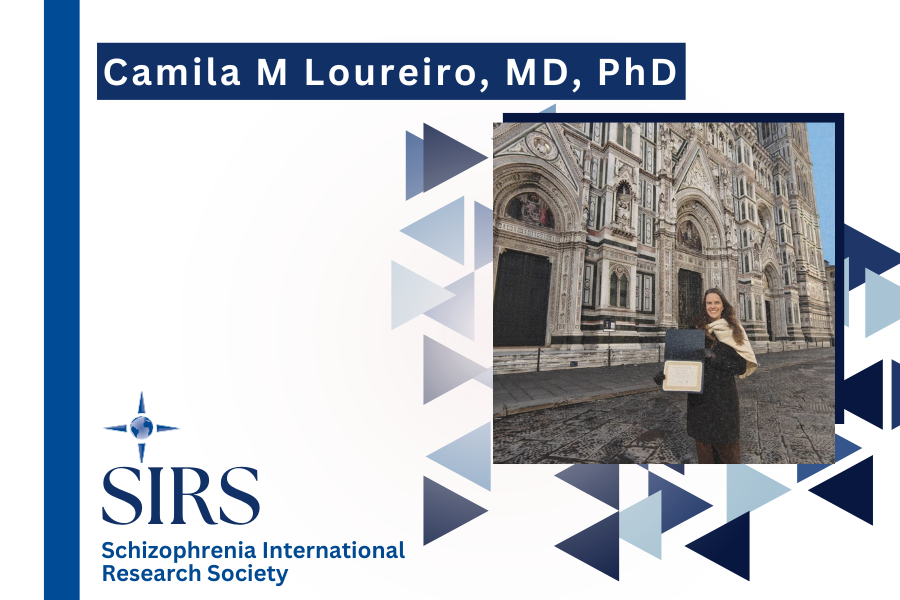
By Camila M Loureiro, MD, PhD, Assistant Professor at the School of Nursing, University of São Paulo (Brazil), SIRS Early Career Awardee 2026
I have always been fascinated by understanding how biology and life experiences come together to influence the development of psychosis. Throughout my career in neuroscience and psychiatry research, I became particularly interested in this field because psychosis often begins during adolescence or early adulthood, a time when young people are building their futures, relationships and sense of identity. Its impact can be profound, affecting not only individuals but also their families. Despite decades of research, many important questions remain unanswered, particularly how environmental and biological factors interact and how we can identify people at risk before symptoms become severe. These questions continue to drive my research today.
My work focuses on epigenetics, a field that explores how environmental exposures can influence gene function without changing the DNA sequence itself. I am particularly interested in understanding how environmental risk factors become biologically embedded during the early stages of psychosis and why some individuals are more vulnerable than others. Ultimately, I hope this research will contribute to earlier identification and more personalised approaches to preventing and treating psychosis.
At the 2026 SIRS Congress, I presented findings from a study investigating changes in a gene involved in the brain’s endocannabinoid system, which helps regulate functions such as memory, learning and emotions. Because cannabis acts on this system, we wanted to understand whether these biological changes were related to psychosis itself or to cannabis use. We found that people with early psychosis showed differences in the regulation of this gene regardless of cannabis exposure, suggesting that some biological changes may be linked to psychosis independently of cannabis use. These findings are important because they remind us that psychosis is not caused by a single factor. Rather, it emerges from a complex interplay between genetic vulnerability, environmental exposures, brain development and biological adaptations that we are only beginning to understand. Our results also highlight an important lesson for psychiatric research: biological signatures associated with environmental exposures do not always mirror those associated with disease states.
Receiving a SIRS Early Career Award was an important milestone in my professional development. Attending the Congress gave me the opportunity to present my research to an international audience, discuss my findings with experts from around the world and establish new scientific connections. One of the most valuable aspects of the experience was participating in the mentorship programme. I was fortunate to be mentored by Professor Graham Murray from the University of Cambridge. Our discussions about research direction, career development and future opportunities encouraged me to think more broadly about how my work can contribute to the field of early psychosis research. The experience reinforced the importance of collaboration and the value of learning from researchers with different perspectives and expertise.
Currently, I am an Assistant Professor at the School of Nursing, University of São Paulo (USP), Brazil, where I investigate how environmental risk factors, epigenetic mechanisms and other biological processes interact during the early stages of psychosis. My research integrates different disciplines to better understand the pathways underlying psychosis and support the development of earlier, more holistic and targeted interventions. As a nurse researcher, I am particularly interested in translating scientific discoveries into preventive strategies and improving the delivery of care for people at risk of psychosis. As a researcher based in Brazil, I am committed to generating evidence that reflects the diversity of populations often underrepresented in psychiatric research, helping to ensure that future advances in psychosis prevention and care can benefit people across different social and cultural contexts.
When I think about a young person developing psychosis 20 years from now, I hope they will benefit from a more tailored, preventive and equitable approach to care. Instead of relying solely on symptoms to guide treatment decisions, clinicians may be able to integrate biological, environmental and social information to identify risk earlier and provide timely and individualised support before the illness significantly disrupts a person's life. Ultimately, my hope is that research will not only advance our understanding of psychosis but also help people preserve their daily lives, relationships, education and future opportunities. Although there is still much work to be done, I am optimistic that, through collaboration, innovation and support from organisations such as SIRS, we can meaningfully improve the lives of people affected by psychosis and their families.