Top

Author Archive |

Assessing Cognition in People with Schizophrenia in Resource-Limited Settings

Early in my career, I worked as a mental health professional in Ethiopia, spending time with people living with schizophrenia and with their families. One thing stayed with me from this experience: the part of the illness that often shaped their lives went mostly unnoticed: cognitive difficulties. These difficulties influence whether they can go to school, hold a job, run a household, or simply keep up with a conversation. Yet they were rarely talked about, rarely measured, and almost never treated. This gap is what drew me into schizophrenia and psychosis research.

To me, one of the most important questions in our field is: how do we recognise and respond to cognitive difficulties in people with schizophrenia? Studies have shown that cognitive remediation therapies can improve these impairments. But before we can offer any treatment, we must be able to measure cognition. In a country like Ethiopia, where specialist clinicians are scarce and there are no validated tools, even this first step was a challenge.

This became the focus of my PhD at Addis Ababa University, supported by the African Mental Health Research Initiative (AMARI). My aim was to develop a measure of cognition that was not only valid, but feasible and acceptable for mental health professionals working in Ethiopian settings. Measuring cognition matters because it lets us track how an illness changes over time, judge whether a treatment is working, and match each person to the best rehabilitation pathway.

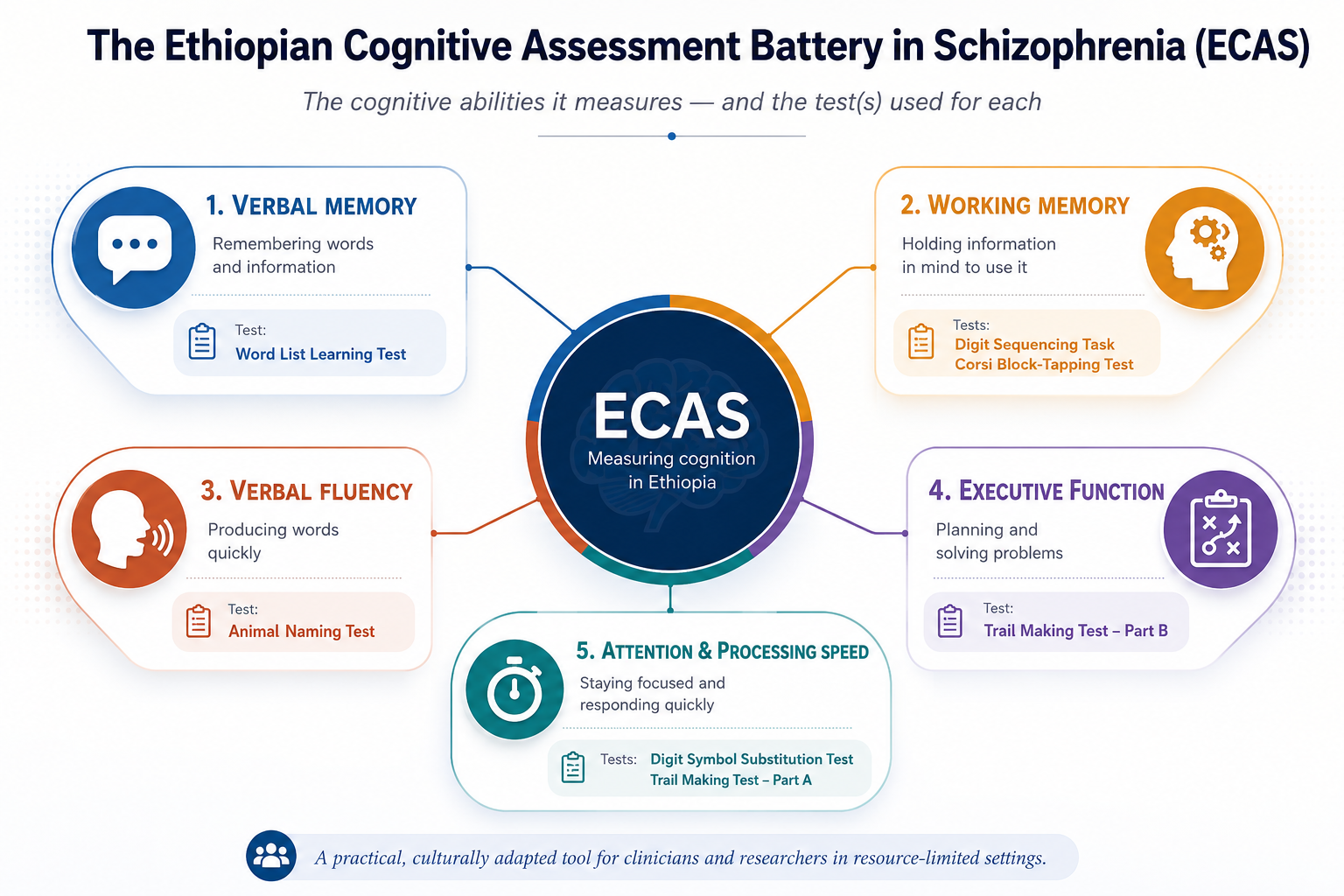
Building such a tool in a resource-limited setting is harder than it sounds. There are few clinicians, little time to administer long assessments, expensive, and limited awareness of cognitive difficulties in the first place. Tools developed in higher-income countries cannot simply be translated and reused, as language and culture pose barriers. When adapting a memory test that uses word lists, for instance, the words have to reflect things that are genuinely part of people’s daily lives. So, I reviewed the existing literature, identified the most promising tools, and then consulted at length with local clinicians, people with lived experience, research experts and family members. Those conversations let me to select, adapt and refine a set of measures, which became the Ethiopian Cognitive Assessment Battery in Schizophrenia (ECAS), a battery assessing six domains of cognition (verbal memory, working memory, verbal fluency, attention and processing speed, and executive function) that clinicians and researchers in Ethiopia can now use. With my supervisors’ support. I led the development and validation of this measure, which was published in six papers listed below.

Being part of the SIRS community has shaped this journey more than I expected. Presenting at the Congress and receiving a SIRS Early Career Award gave me the opportunity to connect with researchers from around the world working on the same questions and to give my work the visibility it could never have achieved from Ethiopia alone. For an early-career researcher from a low-income setting, that recognition is not just encouraging; it also opens doors, builds collaborations, and signals that this kind of work belongs in the global conversation about psychosis. SIRS matters for people with psychosis precisely because it keeps making that conversation more global and moving beyond the few well-resourced settings where most research is still done.

Where do I want to take this next? My current postdoctoral work, again supported by the Wellcome Trust–funded AMARI network, focuses on closing the literacy gap in cognitive assessment by adapting and norming versions of ECAS so they work even for people with little or no formal education, a reality for many in low-income settings. Looking further ahead, I think about a young person who develops psychosis a few years from now in rural Ethiopia. My hope is that, by then, recognising and addressing their cognitive difficulties will be a routine part of their care, not a privilege reserved for those who happen to live near a specialist centre.

It has been an incredible journey, and there is still a great deal to do across Africa and other low-income settings to improve the prospects of people living with a schizophrenia diagnosis. If you have an interest, skills or expertise to share, do get involved. There is much to give and much more to gain.


Better care for people with schizophrenia is urgently needed

I was fifteen when I first read Oliver Sacks. His accounts of the brain, and of the people living with its disorders, made me want to understand the organ that produces the mind. I studied medicine and a research master's in neuroscience, and from early on my interest settled on schizophrenia, one of the most fascinating and least understood conditions in medicine.

I now work as a psychiatrist with patients who have treatment-resistant schizophrenia, meaning the usual medications have not helped them enough. Seeing them every week sharpens one question: after decades of research aimed almost entirely at neurons, why do our treatments still do so little for so many people? I work on neurons too. But I have always been drawn to questions others tend to skip, and that curiosity has grown into three lines of research. In March 2026 the Schizophrenia International Research Society gave all three an Early Career Award in Florence.

The first line grew out of my fascination with the brain's blood vessels, which began during my PhD on how blood vessels form in brain tumours. The blood-brain barrier (BBB), the specialised structure separating blood from brain, matters in schizophrenia for a simple reason: the brain runs almost entirely on glucose from the blood, and nearly all of it has to cross this barrier first. Together with Dr Dana Mustafa, who co-supervised my doctorate, and her team at Erasmus, we studied the barrier in postmortem brain tissue from the Netherlands Brain Bank, using spatial transcriptomics, a method from cancer research that measures the activity of thousands of genes while recording exactly where in the tissue each measurement was taken. We focused on the insular cortex, a region involved in schizophrenia but rarely studied in this detail, and looked separately at the BBB and the brain parenchyma beside it. The two normally run on different energy systems, the BBB mainly on glycolysis and neurons mainly on mitochondrial metabolism. In schizophrenia both appeared to be working harder than in people without the illness. That was unexpected, because most earlier research carried out in the prefrontal cortex had found brain metabolism turned down in schizophrenia. Seeing it turned up in the insula suggests these changes may differ from one region to another rather than being the same throughout the brain. This is an early, proof-of-concept study in a small number of donors and needs confirmation in larger ones.

The second line is older than it looks. In 2005, as a neuroscience student, I proposed testing a ketogenic diet for schizophrenia. It was not funded and I let it go. Years later I returned to it, and the rejected proposal is now a research programme I lead, with more than 800,000 euros in funding over three years, one trial finished and two larger ones in preparation. The restrictive ketogenic diet that helps in some forms of epilepsy can be extra challenging for patients with severe illness to maintain, so we use a drink containing ketones instead. It raises blood levels of ketone bodies, which give the brain an alternative fuel and also act as signalling molecules with various downstream effects. If the brain's energy supply is part of the problem in schizophrenia, this is one way to work on it.

The third line steps outside the brain. Some of the body's most informative signals, such as the stress hormone cortisol or the sleep hormone melatonin, rise and fall throughout the day, so a single blood sample tells you little. With a group at the University of Texas at Dallas, we are testing a wearable sweat sensor, about the size of a watch, that measures several of these markers every few minutes, day and night. Continuous readings like these could help us follow signals such as stress and the sleep-wake rhythm far more reliably than we can today, across many psychiatric conditions including schizophrenia.

None of this is solo work. Each line depends on a team. I owe a great deal to my mentor Dr Nico van Beveren, who backed these unconventional directions and helped turn them into real studies, and to Dr Dana Mustafa for her rigorous scientific teaching, enthusiasm and support. SIRS has been valuable in a different way: the Congress brings clinicians, scientists, patients and families together, and the award connected me to people who take unusual questions seriously.

Better care for people with schizophrenia is urgently needed. I hope that twenty years from now, we can say we achieved it.

Karin Huizer, MD, PhD, is a psychiatrist at Antes (Parnassia Groep), the Netherlands, and a 2026 SIRS Early Career Awardee.

Understanding how environment and biology shape early psychosis

By Camila M Loureiro, MD, PhD, Assistant Professor at the School of Nursing, University of São Paulo (Brazil), SIRS Early Career Awardee 2026

I have always been fascinated by understanding how biology and life experiences come together to influence the development of psychosis. Throughout my career in neuroscience and psychiatry research, I became particularly interested in this field because psychosis often begins during adolescence or early adulthood, a time when young people are building their futures, relationships and sense of identity. Its impact can be profound, affecting not only individuals but also their families. Despite decades of research, many important questions remain unanswered, particularly how environmental and biological factors interact and how we can identify people at risk before symptoms become severe. These questions continue to drive my research today.

My work focuses on epigenetics, a field that explores how environmental exposures can influence gene function without changing the DNA sequence itself. I am particularly interested in understanding how environmental risk factors become biologically embedded during the early stages of psychosis and why some individuals are more vulnerable than others. Ultimately, I hope this research will contribute to earlier identification and more personalised approaches to preventing and treating psychosis.

At the 2026 SIRS Congress, I presented findings from a study investigating changes in a gene involved in the brain’s endocannabinoid system, which helps regulate functions such as memory, learning and emotions. Because cannabis acts on this system, we wanted to understand whether these biological changes were related to psychosis itself or to cannabis use. We found that people with early psychosis showed differences in the regulation of this gene regardless of cannabis exposure, suggesting that some biological changes may be linked to psychosis independently of cannabis use. These findings are important because they remind us that psychosis is not caused by a single factor. Rather, it emerges from a complex interplay between genetic vulnerability, environmental exposures, brain development and biological adaptations that we are only beginning to understand. Our results also highlight an important lesson for psychiatric research: biological signatures associated with environmental exposures do not always mirror those associated with disease states.

Receiving a SIRS Early Career Award was an important milestone in my professional development. Attending the Congress gave me the opportunity to present my research to an international audience, discuss my findings with experts from around the world and establish new scientific connections. One of the most valuable aspects of the experience was participating in the mentorship programme. I was fortunate to be mentored by Professor Graham Murray from the University of Cambridge. Our discussions about research direction, career development and future opportunities encouraged me to think more broadly about how my work can contribute to the field of early psychosis research. The experience reinforced the importance of collaboration and the value of learning from researchers with different perspectives and expertise.

Currently, I am an Assistant Professor at the School of Nursing, University of São Paulo (USP), Brazil, where I investigate how environmental risk factors, epigenetic mechanisms and other biological processes interact during the early stages of psychosis. My research integrates different disciplines to better understand the pathways underlying psychosis and support the development of earlier, more holistic and targeted interventions. As a nurse researcher, I am particularly interested in translating scientific discoveries into preventive strategies and improving the delivery of care for people at risk of psychosis. As a researcher based in Brazil, I am committed to generating evidence that reflects the diversity of populations often underrepresented in psychiatric research, helping to ensure that future advances in psychosis prevention and care can benefit people across different social and cultural contexts.

When I think about a young person developing psychosis 20 years from now, I hope they will benefit from a more tailored, preventive and equitable approach to care. Instead of relying solely on symptoms to guide treatment decisions, clinicians may be able to integrate biological, environmental and social information to identify risk earlier and provide timely and individualised support before the illness significantly disrupts a person's life. Ultimately, my hope is that research will not only advance our understanding of psychosis but also help people preserve their daily lives, relationships, education and future opportunities. Although there is still much work to be done, I am optimistic that, through collaboration, innovation and support from organisations such as SIRS, we can meaningfully improve the lives of people affected by psychosis and their families.

The Brain Under Stress: What a Network’s Resilience Can Tell Us About Psychosis

Soyolsaikhan Odkhuu, Ph.D. — Research Assistant Professor, Department of Psychiatry, Jeonbuk National University Medical School, Republic of Korea

I did not begin in medicine. I trained as a physicist. As an undergraduate in Mongolia, I studied not only physics but also electronics, building and analysing analogue circuits and learning to solve a problem by taking a system apart to see how its pieces fit together. Later, during a master's degree, I worked on the computational side of physics. What eventually drew me toward psychosis research was, in a way, a physicist's question. The brain is the most intricate network we know of, and I became fascinated by what happens to that network when a person's sense of reality begins to change. The field, I found, was full of questions that had barely been explored. I did not want to chase techniques for their own sake; I wanted to use them to understand the brain and mental health. Moving from physics into psychiatry let me bring the mathematics of networks to one of the hardest problems in medicine.

And it is a hard problem, partly because schizophrenia is not a single thing. Two people with the same diagnosis can follow very different paths — different symptoms, different responses to treatment, different chances of recovery. To me, one of the most important questions in our field is whether we can find biological signs that capture those differences: markers that tell us not only that someone has psychosis, but what kind, how far it has progressed, and what is likely to come next. Today we still rely mostly on interviews and observed symptoms. We do not yet have that biological map.

My research tries to build part of it by studying the brain as a network. Picture a transport map: brain regions are the stations, the connections between them are the routes, and a handful of major hubs hold the whole system together. Using scans taken while a person is simply resting, I measure how resilient that network is — and to do this, my colleagues and I "stress-test" it on a computer, removing the busiest hubs one at a time and watching how quickly the rest of the map falls apart. A resilient network reroutes gracefully; a fragile one comes apart early.

Across several studies, a consistent picture has emerged. In people experiencing their first episode of a schizophrenia-spectrum disorder, these core networks were measurably less resilient than in healthy individuals — and the people whose networks held up best also tended to have sharper thinking and milder symptoms. In another study, I looked at people who had recovered well enough to stop their medication; those whose networks were less resilient were more likely to relapse afterward, while those with sturdier networks tended to stay well. And when I compared schizophrenia with a milder, harder-to-classify form of psychosis, that second group sat in between — their networks partly preserved, as if reflecting a genuinely different biology rather than simply a milder version of the same illness.

Why does this matter outside the laboratory? Because a measure of network resilience could eventually help with real decisions. It might help a clinician weigh who can safely come off medication and who needs closer follow-up. It might flag, early on, who is most vulnerable, so that support arrives sooner rather than later. Imagine a young person who develops psychosis twenty years from now: the hope behind this work is that, instead of a long stretch of trial and error, their care could be guided by a read-out of how their brain is actually coping — personalized from the very start.

This past year I had the privilege of presenting some of this work at the SIRS Annual Congress in Florence as an Early Career Awardee. While I presented, many researchers took an interest and asked me question after question — a fantastic and motivating experience for a young researcher, and one that sent me home with new ideas. What I value most about SIRS is that it brings together people from every corner of the world who are circling the same difficult questions, and it makes it possible for someone early in their career to be part of that conversation.

I am now leading a project to turn these resilience measures into a practical toolbox — one that can sort psychosis into clearer subtypes and stages of illness. If it succeeds, the goal is that when a patient first comes to the clinic, we could identify which subtype they have and how far the illness has progressed and begin to anticipate what lies ahead. My hope is that the brain's quiet ability to stay standing under strain — its resilience — turns out to be something we can measure, protect, and one day help to strengthen.

Beyond Symptoms: Building Meaningful Lives for People with Psychosis

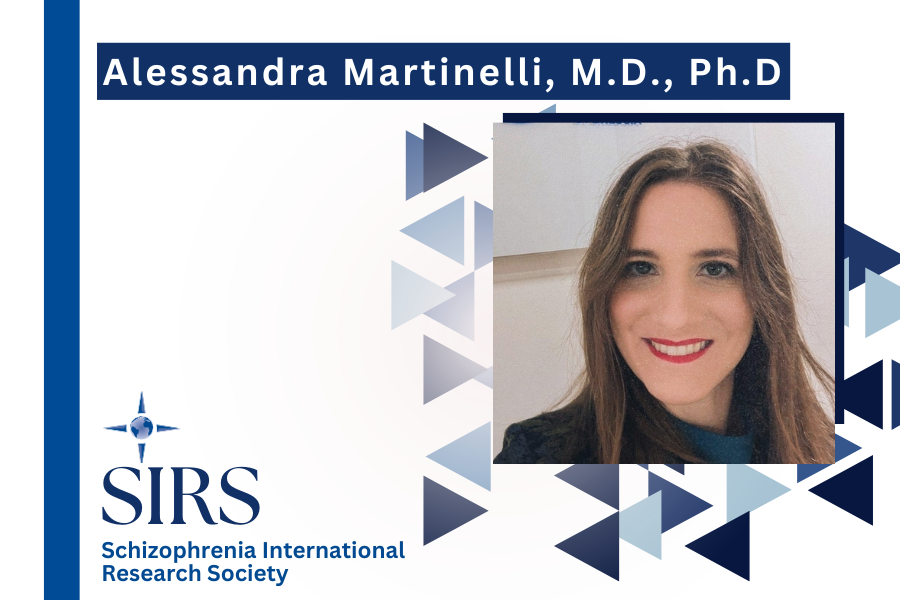
Alessandra Martinelli, M.D., Ph.D., Psychiatrist and Clinical Researcher, Head of the Research Unit of Rehabilitation and Social Psychiatry, IRCCS Fatebenefratelli – Saint John of God Clinical Research Centre, Brescia, Italy


When I began my training in psychiatry, I met many people living with schizophrenia and other psychotic disorders whose lives had been profoundly affected by their illness. What struck me most was that they were not only asking for relief from symptoms. They wanted friendships, meaningful activities, independence, and hope for the future.

This experience shaped the question that continues to guide my work today:

How can we help people with psychosis not only reduce symptoms, but also build meaningful and resilient lives?

As a psychiatrist and researcher, I have focused my career on recovery, rehabilitation, and community-based mental health care. While advances in treatment have improved outcomes for many people, challenges such as loneliness, stigma, unemployment, and social exclusion remain common. These are not simply side effects of illness—they are central factors that influence wellbeing and recovery.

One of the most important questions in psychosis research is how we can better understand people's everyday lives. Traditional clinical assessments provide valuable information, but they often capture only a brief moment in time. Much of what matters happens between appointments.

To address this gap, I became involved in the Italian multicenter DiAPAson project, which used smartphones and wearable activity monitors to explore daily experiences, emotions, and physical activity in people with schizophrenia spectrum disorders. Rather than asking participants to remember how they felt weeks earlier, we collected information in real time during their everyday lives.

Our findings highlighted the importance of looking beyond symptoms. We found that physical activity, emotions, daily routines, and social experiences are closely connected. We also observed important differences between men and women, suggesting that personalized approaches may be needed to support recovery more effectively.

Today, my research is moving toward what is often called precision psychiatry. The idea is simple: every person has unique strengths, challenges, and recovery goals. Instead of relying only on diagnosis or symptom severity, we should combine information about daily experiences, social functioning, lifestyle, and biological factors to better understand what helps each individual recover.

This vision is reflected in the EMPOWER-RES study, which I currently lead in Italy. The project combines real-time experiences collected through smartphones, physical activity measured by wearable devices, and biological indicators related to stress and inflammation. Our goal is to better understand resilience and personal recovery among people living in mental health supported accommodation services.

Looking ahead, I am excited by the possibility of integrating digital technologies with recovery-oriented care. I imagine a future in which a young person developing psychosis receives support that is tailored not only to their symptoms, but also to their personal goals, daily experiences, and individual strengths.

The SIRS plays an important role in making this future possible. By bringing together researchers, clinicians, people with lived experience, and families from around the world, SIRS helps transform scientific discoveries into real improvements in care. Receiving the SIRS Early Career Award has been a tremendous honor and an important milestone in my career. It has strengthened my commitment to research that connects scientific innovation with the everyday realities of people living with psychosis.

Ultimately, I believe that the future of psychosis research is not only about understanding illness. It is about understanding people—their aspirations, relationships, resilience, and capacity for recovery. If our research can help people live the lives they want to live, then we are moving in the right direction.

Looking Through The Eye to Understand The Brain

Looking through the eye to understand the brain

What first drew me to psychotic research was a deceptively simple frustration: we cannot see what is wrong. Unlike a broken bone on an X-ray or a tumor on a scan, the changes in the brain that underlie psychosis are largely invisible to us in living humans. Brain scans exist, of course, but they are expensive, demanding, and often distressing for patients who are already struggling. When a person experiences their first episode of psychosis, clinicians are largely working blind. They lack reliable biological markers to guide them on who is at highest risk, when to intervene, or how well a treatment is working.

The eye as a window to the brain

So we and others started asking a different question. What if we didn't have to look at the brain directly? The retina, which is this thin layer at the back of your eye that captures light, is actually a direct extension of the brain. Developmentally, it grows from the same tissue. It shares the same cell types, the same molecular machinery, and many of the same vulnerabilities. And critically, we can image it in a few minutes with a device called an optical coherence tomography (OCT) scanner, at a very competitive cost. And this cool thing is this device can be found in many eye clinics and hospitals already.

My research over the past several years, conducted at the Psychiatric University Hospital Zurich with Prof. Philipp Homan and a talented group of international collaborators, has focused on one central question: can the retina tell us something about a person's risk for schizophrenia, before symptoms even appear?

The answer is yes, and go deeper than we expected. In two studies published in Nature Mental Health and JAMA Psychiatry, my colleagues and I examined data from over 36,000 people in the UK Biobank — a large health research database of people without a schizophrenia diagnosis. We looked at their genetic risk for schizophrenia (calculated from their DNA) and compared it to the microscopic thickness of their retinal layers. People with higher genetic risk for schizophrenia had subtly but measurably thinner retinas — specifically in a layer called the ganglion cell inner plexiform layer. This layer contains the synaptic connections of a type of retinal cell called amacrine cells - interneurons that process signals within the eye. Crucially, these same cells turned out to harbor a striking concentration of schizophrenia risk genes, and this finding held up across humans, monkeys, and mice, and even in fetal retinal tissue, suggesting it traces back to early brain development.

In other words: the genetic "signature" of schizophrenia is written not just in the brain, but probably also in the eye, specifically in cells whose job involves synaptic communication. This provides some of the further evidence that schizophrenia might be a disease of the synapse (i.e. the connection point between brain cells), and that this disruption begins long before a person ever experiences a psychotic episode.

Why this matters for patients and families?

Imagine someone showing some early warning signs that worry their family, friends or partners. Early intervention is known to dramatically improve outcomes. This means a shorter period of untreated psychosis means better cognitive functioning, better social integration, more autonomy again. But today, identifying who among those at-risk individuals will actually go on to develop psychosis is still very difficult. We believe, we - together with others - laid the foundations with our retina research for future studies that will test how informative retinal changes are for early detection, risk stratification and treatment monitoring. If fruitful, a simple eye scan at the first appointment together with some questions by the psychiatrist could be all to determine someone’s brain health.

Rohail Kahn

Written by:

Rohail Kahn

Growing up, my brother was my idol.

His determination, unrelenting drive in life made me realize how important he was to others around him. His life, ever unpredictable, spiraled into a shadow over his brilliance. His battle with schizophrenia has become a part of our family’s story, one of pain, perseverance, and progress.

I watched him go from a boy with goals, a social life, and connection with family and friends, to a young adult who destroyed everything he worked for.

In 2016, my brother began his college journey at the University of California, Santa Cruz

(UCSC). As a Division 3 NCAA runner, he had the discipline, talent, and will to speak of a bright future.

But as running seasons changed, so did his path in life. College, intoxicated by the allure of independence, became candy for a child. My brother found himself in a crowd that led him into the drugs that made hell seem like a second layer of heaven. His experimentation morphed into dependency, and sooner than later, he dropped out. The cannabis, methamphetamine, and LSD that once promised escape turned into handcuffs from life.

Addiction stole him.

He dropped out in his freshman year and began living in our house. Then he left for three months. Some of the hardest three months for my family. And with his diagnosis, came the symptoms.

“Stop stalking me.”

These words erupted throughout the house every hour.

The delusions that live in his head, only hurt him. He complains about how alone he is, but how he is never alone. His sleep and hygiene deteriorated, to the point where I couldn’t even sit next to him. His hair and beard grew into a nest. His scribbles on the wall showed nothing but his captivity. After the walls were pure graphite grey, the numerous 51/50 calls for his aggression, and his countless visits to the mental health hospitals, he decided to rent his own apartment in San Francisco.

At the time, my mental health was depreciating. With my fuming hormones as a teenager, I began to have thoughts that I was schizophrenic. It was scary to think about. Sleepless nights thinking about how schizophrenia is going to affect me. It wasn’t until I started reading about mental health that I learned how common these feelings can be for teens, and that they are often temporary and treatable with the right support. Looking back now, I realize how important it is to seek help and to share your struggles. Those feelings taught me to value mental health and empathy in a way I never had before.

My brother never took mental health seriously. He created conspiracies about companies threatening to attack him, and blocked any company logos in his room. He put tape on other people’s rooms. He threatened to hurt people if they continued stalking him. One report led to another, and he officially got evicted. I still recall the landlord telling my family about how thick the number of reports were. It was sad to see that he could go nowhere.

My brother decided to seek treatment - a flicker of hope we saw.

While on medicine, my brother aspired to go to college, to pursue a degree in art, and one day, become an artist. Each step forward, no matter how tentative, is a success.

My brother has shown me the true meaning of perseverance. Not only with diagnosis, but with his dreams.

 Elaine Elisabetsky, Ph. D.

Written by:

Elaine Elisabetsky, Ph.D.

After finishing my PhD in the memory field, I was troubled with the prospect of my career. Although memory neuroscience is a fascinating topic from a scientific perspective, for the young demographic of 1980s Brazil, memory issues were not a high priority in public health, and I aspired for my studies to have practical implications. As a pharmacologist, though I knew that teaching and mentoring could be very gratifying, part of me envied the professional activities that, though perhaps less intellectually challenging, result in more immediate and concrete outcomes. Two pieces of information helped me respect the desire to change course: (i) I became aware that Brazil imported 78% of the medication it needed, and (ii) I learned that during the Falkland War between Argentina and the UK, the UK and allied countries ceased the export of antibiotics to Argentina. It dawned on me how the dependency in medical resources could undermine a country’s sovereignty in different ways.

During my weekly time with Current Contents (if you are old enough to be anywhere near science at that time you know what I am talking about) I came across the Journal of Ethnopharmacology. If you are not acquainted with the discipline, it focusses on investigating traditional systems of medicine. It can be used for anything from an anthropological view of an ethic group concepts of health and disease, to adapt public health info in a culturally appropriate way to ameliorate outcomes (hygiene practices, vaccines, etc), to the search for new drugs from natural resources used with medical purposes. I decided to become an ethnopharmacologist, let go of a post doc grant from the French Government to work at the Hôpital Sainte-Anne (where chlorpromazine was discovered) and Gif Sur Ivette, and move to the Brazilian Amazon with a research grant from the Brazilian CNPq (National Council of Scientific and Technological Development). At the time there was a governmental effort to take young (and unemployed) PhDs to the Amazon region. My naïve idealistic idea was that a country with one of the planet’s highest rates of biodiversity and rich in traditional peoples who know the value of the flora, that is rich in sociobiodiversity, a sound scientific effort based upon these resources had the potential to help create a national pharmaceutical industry.

Please believe me, as someone born and raised in the cosmopolitan metropolis of São Paulo — which makes me feel comfortable in NYC — an Amazonian town in the early '80s felt as foreign to me as it would to most people reading this. My strategy was to talk to as many people as possible about diseases and cures in hope to identify local treatments to mental disorders. As maintaining the health of the family members is traditionally a women’s role, I visited as many different villages as possible and baked farina, assisted in the fields, drunk midafternoon coffee, washed clothing and did whatsoever activities women do to discuss disease and treatments. Many of these activities are communal at the very small villages by the rivers or entrenched in the jungle. With my training on psychopharmacology and behavioral animal models, whenever I thought I had a decent working hypothesis, “does the species X have psychopharmacology property Y?”, I could format the experiments and test it in the lab. The other common strategy was to go to the Ver-o-Peso market, where a whole section was and is dedicated to medicinal plants commerce and learn from the vendors and their exchange with their clients.

Aa a more universal academic characteristic, you may identify when I say I needed to generate results, present posters at meeting and publish papers as any other young scientist do to hopefully establish a research group. You can then understand I could not opt/specialize in a given disorder: if what I heard led me to anxiety, or pain, or epilepsy, or depression, so be it. During the following years we were able to characterize the psychopharmacology profile and mechanisms of action of anticonvulsants (https://pubmed.ncbi.nlm.nih.gov/?term=Elisabetsky+and+Linalool&sort=date), analgesics (https://pubmed.ncbi.nlm.nih.gov/?term=Elisabetsky+and++psychotria&sort=date), a nootropic neuroprotector
(https://pubmed.ncbi.nlm.nih.gov/?term=Elisabetsky+and+Ptychopetalum&sort=date) and an antipsychotic
(https://pubmed.ncbi.nlm.nih.gov/?term=Elisabetsky+and+alstonine&sort=date) drug.

It was this last piece of research that got me into the sad and fascinating schizophrenia field. The study of alstonine as an innovative antipsychotic came from an ethnopharmacology expedition among the Igbo in Nigeria. In the early 90s, the Igbos comprised an over 10 million people tribe, organized as dozens of small kingdoms. I was part of an ethnopharmacology expedition sponsored by an American pharmaceutical company interested in antiviral drugs. During the expedition in rural Nigeria (Enugo State), we came across a group of people extracting palm oil; one in this group happened to be the King of that kingdom. After understanding what we were doing, he insisted we should visit Dr. Chidi Osondu, according to him a famous healer with clients coming from all over Nigeria. So we did and it turned out that Dr. Osondu was a traditional psychiatrist. Part of his clinic was a very dramatic sector where voodoo dolls, remains of hanged animals, a portrait of the holy supper, another from Shiva, and several other quite weird components, to say the least, were present. But in the middle of this film-like setting, his description of the treatment given to patients made every sense to me: he did X when they arrive too agitated or aggressive, or Y if not, the way he titrated the dose over the course of treatment, etc. Of note, the patients headquarter was adequate, and internees quickly rose from the floor straw mattresses (no impaired blood pressure as you would expect from a Rauwolfia extract) and politely interacted with us visitors (unlike what you would expect from patients treated with older antipsychotics). Mind you that this is 1993 and clozapine was quite new, expensive and certainly not available at rural Nigeria clinics. I was given some of the medicinal plant powder by Dr. Osondu, and with the help of chemists and my students proceeded to characterize the alkaloid alstonine as an atypical antipsychotic with an innovative mechanism of action (at the time the only that had no direct interactions with dopamine D2 receptors).
We know the prevalence statistics for schizophrenia. We also know of the difficulties in diagnosing and categorizing a disorder with such diverse presentations and courses. I have no means to know if Dr. Osondu’s patients were affected with schizophrenia, but they were certainly mentally ill enough to be admitted to the clinic for a certain amount of time. Now we are also certain that these patients were treated with an atypical antipsychotic. Our ongoing efforts aim to bring alstonine to clinical application, offering hope for improved therapeutic options and a better quality of life for individuals battling schizophrenia, as so many are underserved by current treatments. The history of alstonine makes one wonder how many useful drugs are overlooked due to Western science's inability to view other medical systems as legitimate systems rather than mere folklore. If we surpass the prejudice, a new path to discovering drugs useful for managing schizophrenia might open up.

Wordpress Social Share Plugin powered by Ultimatelysocial