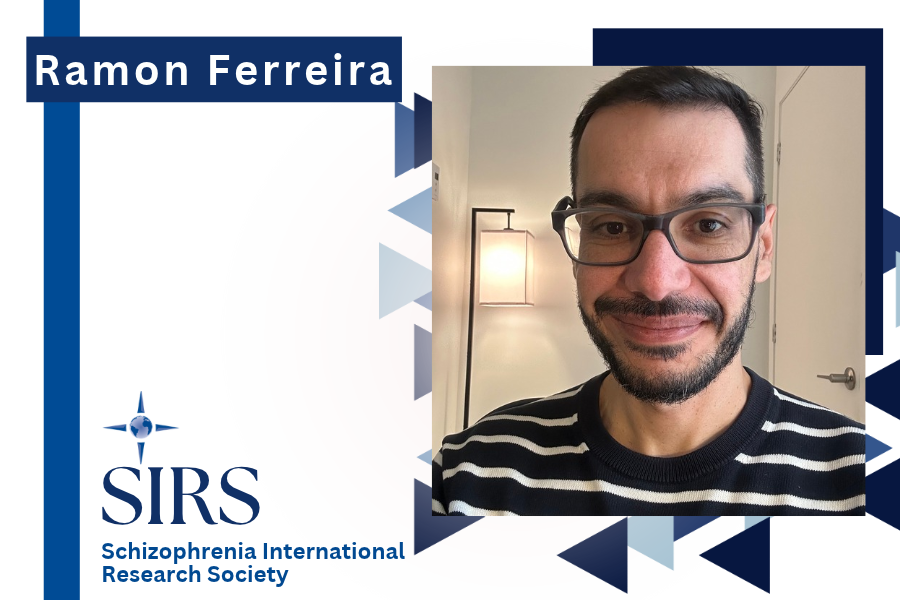
Ramon Ferreira
Where does a conversation break?
I came to psychosis research through clinical psychology before I came to it through code. My training began in Brazil, where I learned to listen to people whose speech others had called "disorganized." What struck me was how often that label ended the conversation instead of starting it. Something was being said. The question was what, and to whom.
Today I work between computational psychiatry at McGill University in Montreal and medical anthropology at Universitat Rovira i Virgili in Spain. Over the last century, psychotic language was described first as a deficit, then as a deviation, and now increasingly as numbers that differ from a norm. Each step brought new tools, and each risked forgetting that speech is something people do together. Working across these fields brings me to one question: when communication becomes difficult in psychosis, what happens between the person speaking and the person listening? Understanding that encounter could help us respond more thoughtfully to people struggling to be understood.
Learning from the mistakes
Speech-to-text systems, the technology behind automatic captions, use patterns learned from recordings and text to predict words. My research looks at what happens when those predictions fail.
With colleagues at the Douglas Research Centre and elsewhere, I study recordings of people with and without psychosis. We compare automatic transcriptions with what was said. Our findings suggest that transcription errors are related to how expected the speech is in context. We are investigating what that relationship can tell us about communication.
Imagine an automatic caption replacing an unexpected word with a more familiar one. This hypothetical example illustrates the problem: the caption reflects both what someone said and what the system expected to hear. An error alone cannot tell us whether the speaker was having difficulty communicating. An error is not simply a fact about the speaker; it is a fact about an encounter.
That distinction matters when researchers use speech to look for signs of psychosis. An algorithm’s output depends on the people and languages it learned from, as well as the recording and the speaker. We need to understand those influences before interpreting an error as evidence about someone’s health.
Our work also suggests that people with and without psychosis may share the same basic link between meaning and predictability, while differing in where their speech falls along it. That is a reason to look for what we have in common, without losing sight of each person’s difficulties.
What SIRS made possible
Receiving an Early Career Award at the 2026 Schizophrenia International Research Society Congress in Florence gave this work visibility and helped me connect with researchers across disciplines. It can be hard to find a room where clinicians, computer scientists and social scientists take the same question seriously. SIRS provided that opportunity.
A conversation at the Congress also became an ongoing mentorship that is helping shape the next stage of my career. This is a concrete example of why the Early Career Award program matters: recognition can open conversations that continue long after a meeting ends.
For people living with psychosis and their families, I believe SIRS’s value includes bringing researchers together to question assumptions and improve the research that may eventually inform care. I hope those conversations increasingly include people with lived experience, including their priorities for communication and support.
A young person twenty years from now
Imagine a young person experiencing psychosis in 2046. I hope speech tools will help their care team notice changes that deserve attention and adapt conversations to their needs. Those tools would need careful testing, including whether they actually improve care. A change in speech should prompt a conversation and assessment, rather than automatically become a diagnosis.
With Dr. Katie Lavigne’s team, I am starting to connect patterns in speech with how the brain predicts language, using brain imaging. I also want to better distinguish someone’s unusual but meaningful way of speaking from communication difficulties for which they want support. A person’s history, language and culture all matter to that distinction.
Medical anthropology helps me ask whose speech a system understands, whose it misreads, and what its measurements leave out. Developing these tools with people living with psychosis and their families could help us decide what is useful in everyday life. My hope is that technology will give clinicians more reasons to listen carefully, and people more opportunities to be heard.